

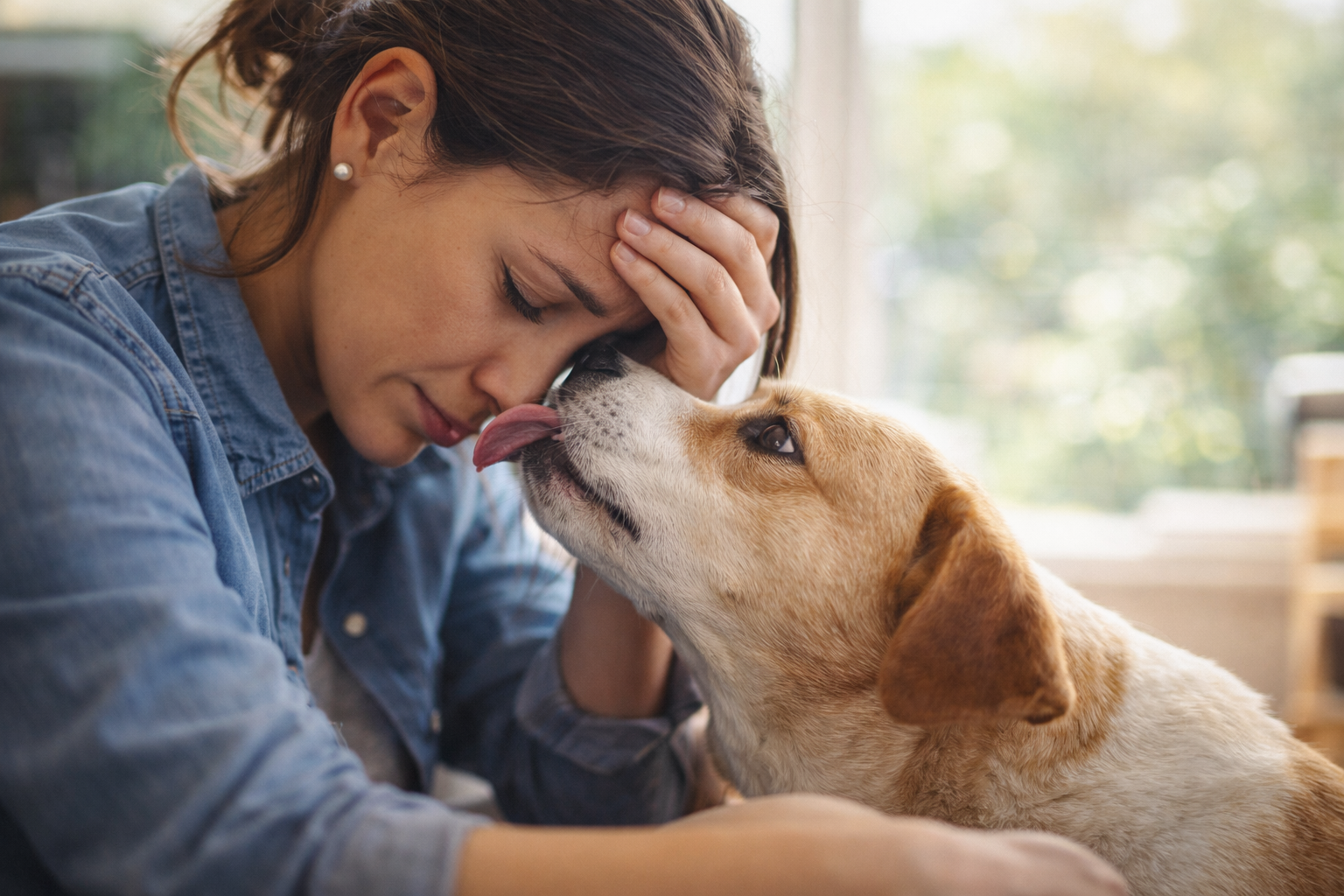
The Emotional Mirror Effect in Pet Parenting
Dogs may not fully understand human language, but they understand human emotions deeply. They observe tone, facial expressions, body posture, and daily routines.
Long before we realise we are stressed, our dogs often feel it.
This emotional absorption is backed by behavioural science. Studies measuring cortisol, the stress hormone, show that dogs frequently mirror their owners’ stress levels. When humans experience prolonged stress, their dogs show elevated stress markers too.
Dogs do not just live with us. They emotionally sync with us.
Dogs Read Energy, Not Words
Dogs are natural emotional observers. Through domestication, they developed the ability to interpret human signals like:
- Voice tone
- Facial expressions
- Movement speed
- Eye contact
A calm owner creates a calm dog. A tense environment creates alertness.
Dogs respond more to how we say things than what we say. Even neutral words spoken in frustration can create anxiety.
How Human Stress Appears in Dogs
When dogs absorb stress, it shows through behaviour changes rather than obvious distress.
Common signs include:
- Restlessness
- Clinginess
- Excessive barking
- Withdrawal
- Destructive chewing
- Reduced appetite
These are often misunderstood as training issues, but they may be emotional reflections.
Routine Disruptions Increase Anxiety
Human stress often disrupts pet routines.
Late walks, irregular feeding, reduced playtime, or emotional unavailability create insecurity for dogs. They thrive on predictability.
When routines shift frequently, dogs may develop separation anxiety, hypervigilance, or restlessness.
Urban Stress Makes It Worse
In Indian city homes, dogs are exposed to both environmental and human stress.
Traffic noise, work pressure, fast schedules, and limited downtime create emotionally charged spaces.
Dogs living in such environments absorb layered stress, increasing anxiety risk.
Signs Your Dog Is Absorbing Your Stress
Look for subtle changes like:
- Following you constantly
- Sudden barking at small sounds
- Restlessness at night
- Reduced playfulness
- Anxiety when you leave
These signs often intensify when owners go through stressful periods.
Creating Emotional Balance
Helping your dog regulate stress starts with regulating your environment.
Simple steps include:
Maintaining consistent routines
Daily exercise and stimulation
Calm voice and touch
Dedicated bonding time
When humans feel calmer, dogs stabilise naturally.
Final Thought
Dogs may not understand your responsibilities or worries, but they understand your energy.
They feel tension in your voice and restlessness in your routine.
Caring for your dog’s emotional well-being sometimes begins with caring for your own.
Because dogs do not just live beside us. They feel life with us 🐾